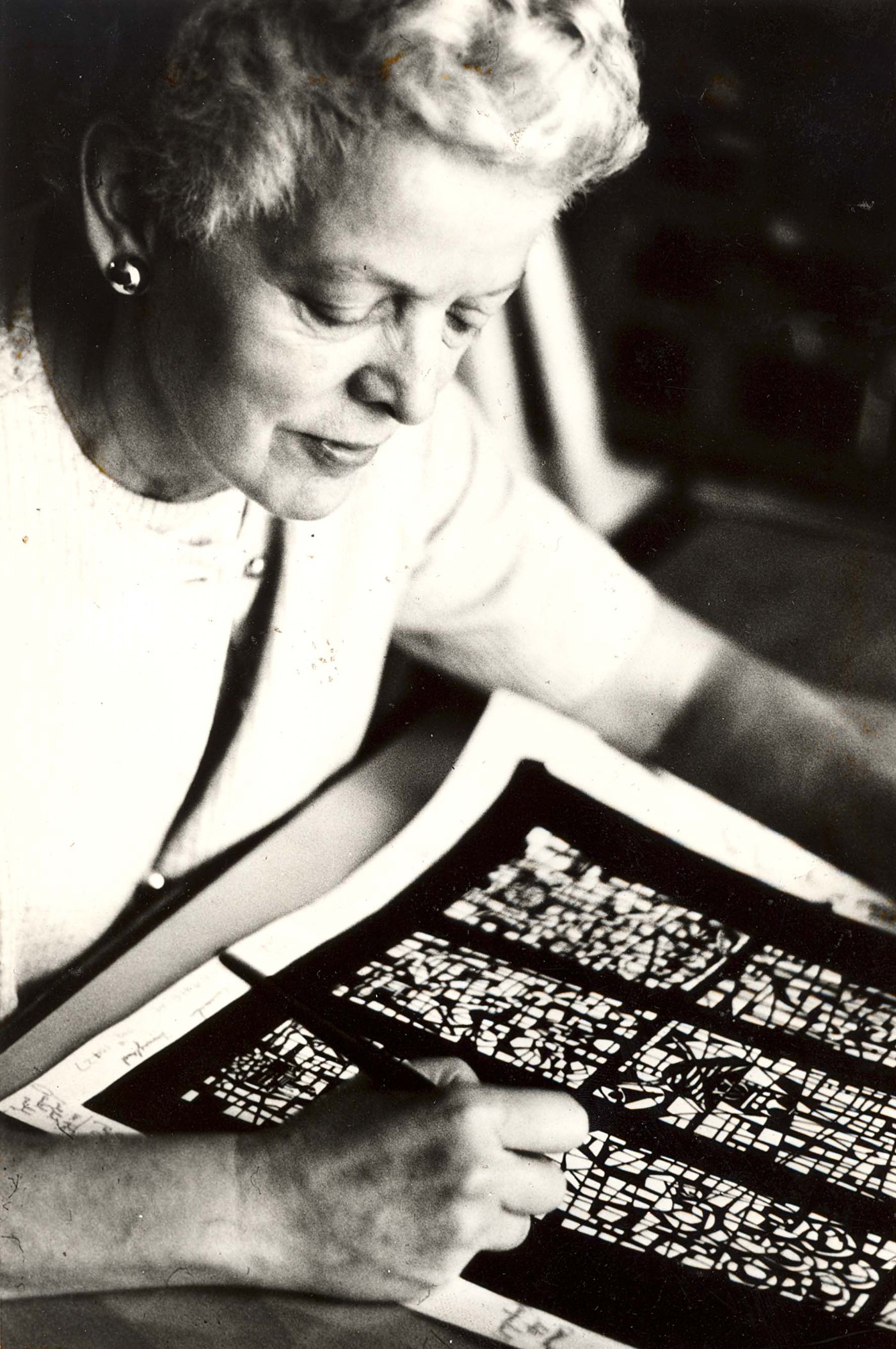
 Marguerite Gaudin
The windows were designed by master designer Marguerite Gaudin, a long-time Willet employee (and eventually, vice president) who designed more than 1,000 different sets of stained glass windows for the company. Willet’s design was based on input from Wesley’s Stained Glass committee, and in particular Senior Pastor Dr. James Huggin. Reams of correspondence passed between Willet and Wesley as the window’s content and design was created and refined. That process took about a year.
When that was complete, the designs were passed on to Willet craftsmen who selected and cut glass, added layers of paint and hours of skilled craftmanship to create the stunning images, assemble the windows, and ship them to High Point for installation.
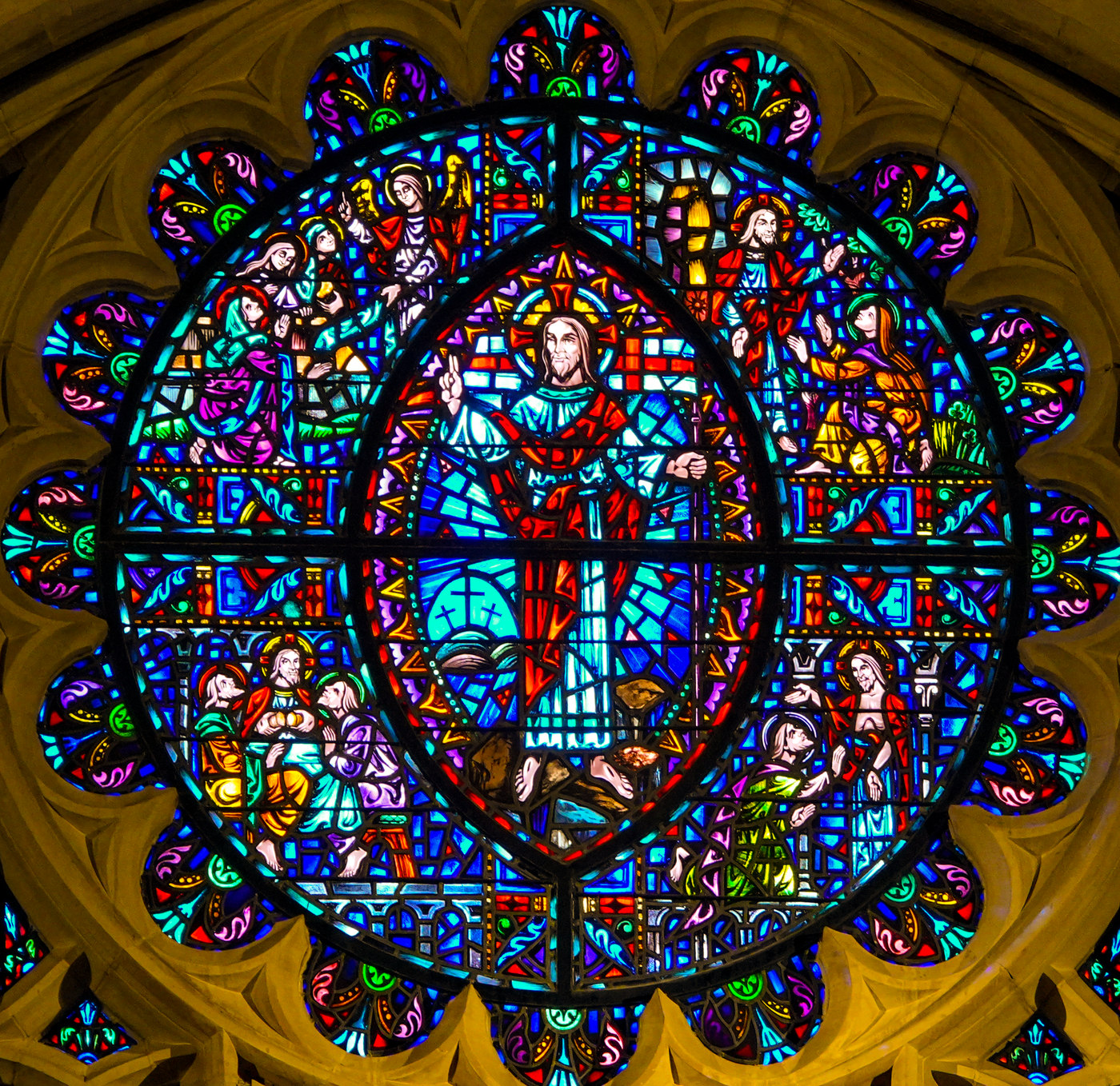 Chancel Window
The Triumph of the Triune God
The chancel window at the front of Wesley’s sanctuary is the most-viewed window in the space. Its theme is both obvious and appropriate: the triumph of the risen Christ, and hence, the Holy Trinity, over death. The chancel rose, the circle-like space at the top and center of the window, depicts the risen Christ surrounded by scenes from four post-Resurrection stories, Mary Magdalene meeting the angel, the women at the tomb, the disciples on the Road to Emmaeus, and Thomas’ encounter with the risen Lord
 East Transcept
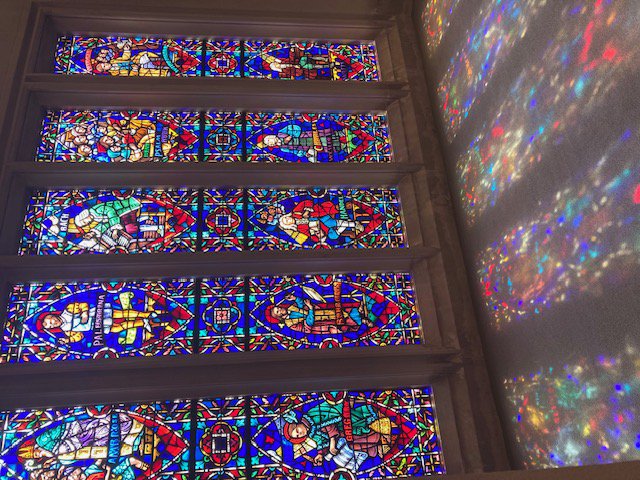
The praise window in the east transcept in Wesley’s sanctuary (to the viewer’s right when looking at the Chancel window at the front of the church) celebrates the centraility of praise – specifically through music -- in the history of Judeo-Christianity worship, from Bible times to the current day.
Like its companion Prayer window in the west transcept, the Praise window is organized in two distinct parts. The five longer lancets at the top reference examples of musical praise in the Bible. The short lancets at the battle speak to praise in the millenia since those times. Both the Praise and Prayer windows share a similar, though not identical, organization – a large, central image from the Bible surrounded by additional biblical scenes and then, in an lower section scenes from history.
 Prayer Window
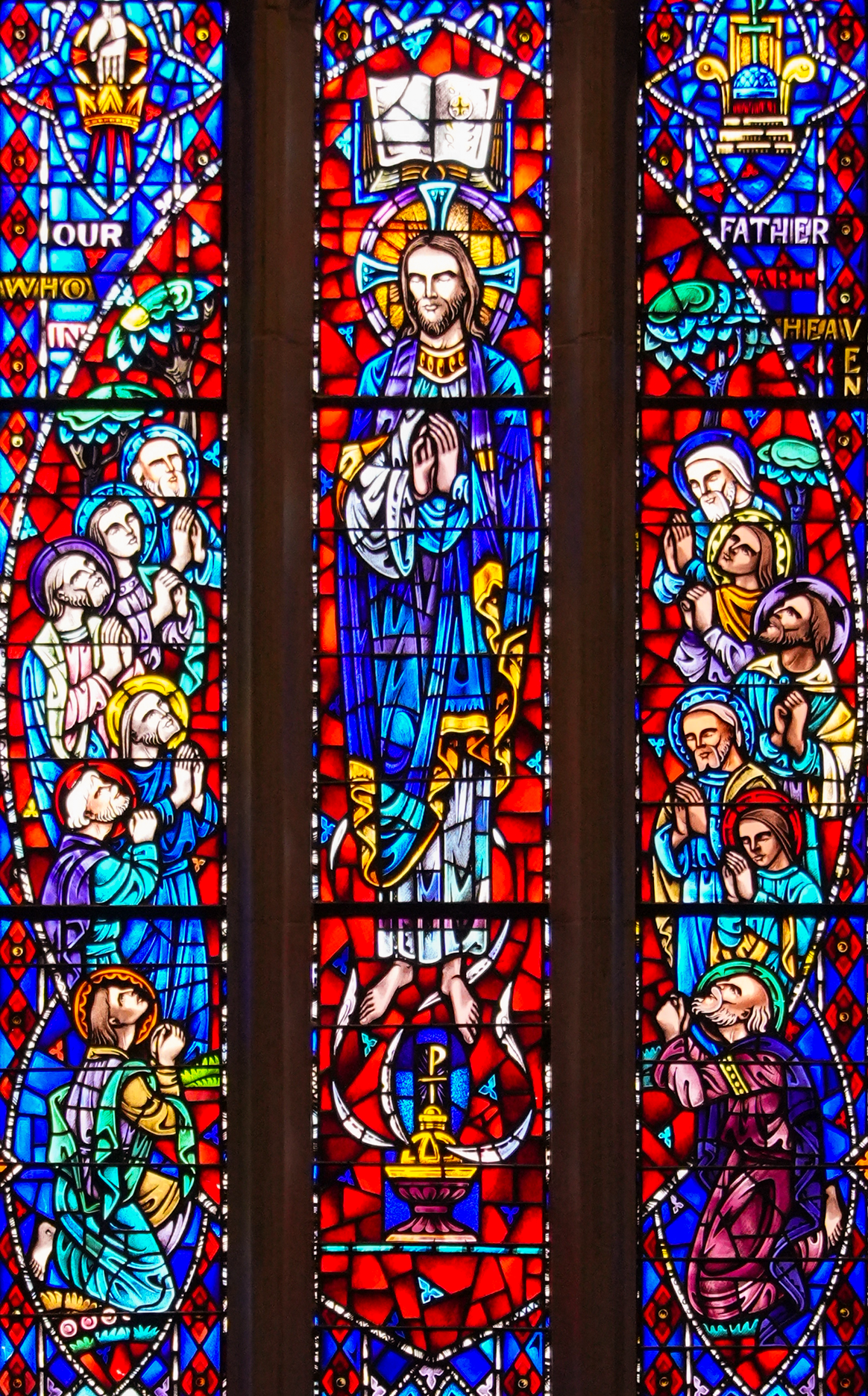
The prayer window in the west transcept in Wesley’s sanctuary (to the viewer’s right when looking at the Chancel window at the front of the church) honors and recalls the importance of prayer, from Bible times to the current day.
 The I Am Windows
Clerestories
The 10 high windows — the clerestories -- towering over Wesley’s sanctuary seating area are devoted to the ten “I AM” sayings that appear in the Gospel of John. In each of the sayings, Jesus is using a different statement or metaphor to communicate to His followers the nature of God. All the sayings are preceded by the subject-verb phrase “I am,” which has the effect of proclaiming Jesus as God in two ways through a clever play on words. The particular saying that is the theme for a window, is written in each window, typically in the middle of the window, nearer the top of the window thant he bottom.
Each of the stories on display are connected to the “I AM” saying represented in that particular window. Some windows have more stories than others, but all speak to the essential truth and hope of Christianity. Christ is God, come to Earth, and prepared, some day, to come again.
Clerestories were a common feature in both Romanesque and Gothic cathedrals, as well as other structures. They are defined as tall walls containing windows above eye level. The name has a simple derivation: they are “clear storeys” – that is, a storey, or floor, that is clear, allowing for light, air, or both, to enter the space.
Nave Aisle Windows
The Nave aisle windows – the windows alongside the rows of pews but below the high clerestories – are the most accessible of all the stained glass windows in the sanctuary. Much of the material is at eye level or below, and is sited along the outside aisles next to the pews. For that reason, the creators of the window chose scenes that “contain injuctions as to present conduct” -- that is, scenes that offer advice and direction in how to live, based on biblical texts. The textual basis involve two separate passages, both from Matthew’s gospel. Both will be familiar to most Christians.
 North Window- Peter Doub
The church through the ages.
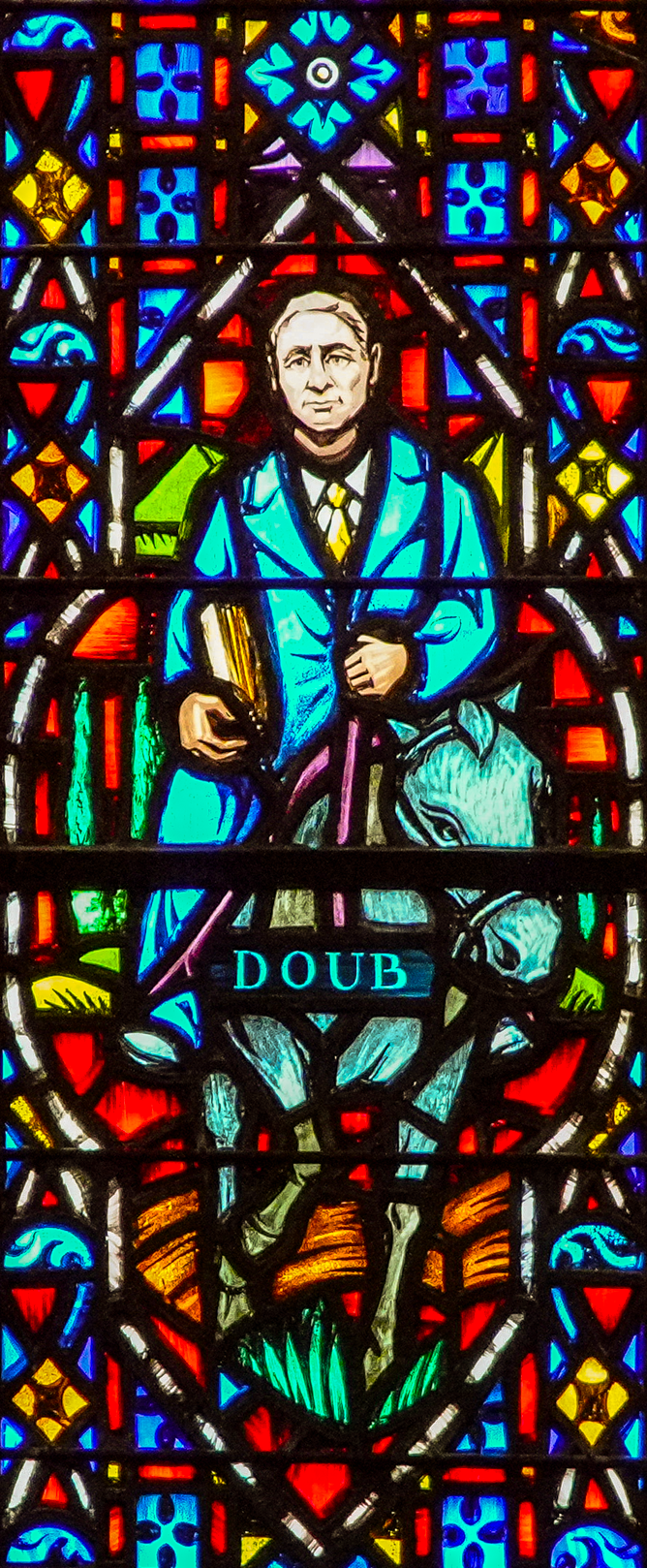
The stained glass in the North window presents the historic witness of the church to the community at large, and offers a broad overview of the history of Christianity.It is not easy to see from inside the sanctuary. The many figures and details are best viewed from the balcony area.
The organization of the window is essentially a chronology of the Christian church. It begins with the four evangelists and spreads downward through the centuries, right up to the 20th century, when the window and the Wesley sanctuary was constructed.
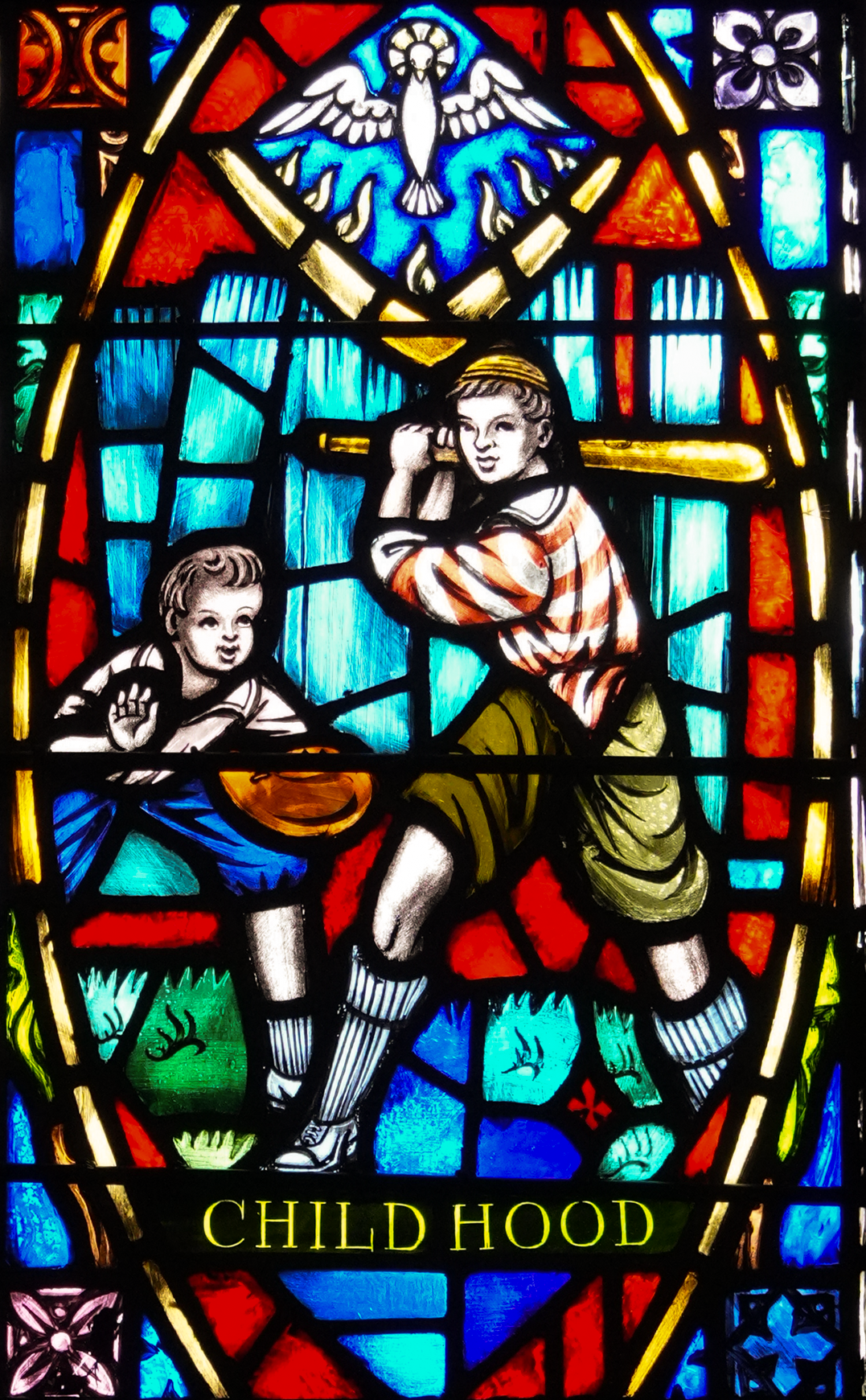 Tower Room Windows
In the narthex at Wesley, beneath the space occupied by Wesley’s bell tower, is a striking vertical window representing the stages of life. The window and its message was deemed appropriate given that the window is in area that is a passageway. The window illustrates humankind’s passage from birth to death. The journey portrayed ascends chronologically from birth to death.